Education
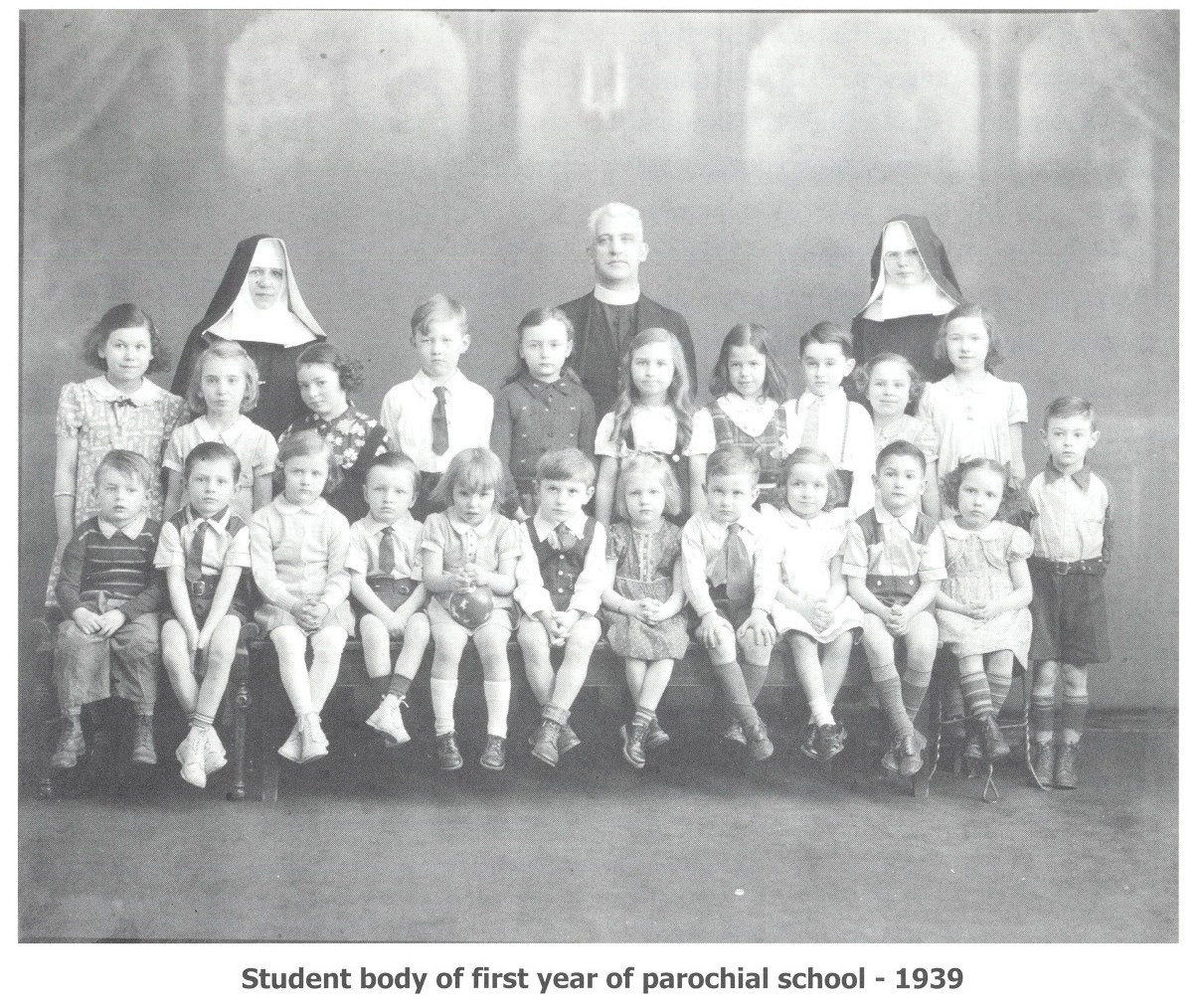
Most communities had heritage schools that taught Ukrainian language and history to the younger generation. Many of these programs met in church basements. However, in the fall of 1921, the parish of St. Nicholas Ukrainian Catholic Church in Passaic broke ground for its own school building and hall that was completed in 1922 and still stands today. Initially, it was only an evening school because many children worked during the day at nearby factories, but by 1940 it became a regular parochial day school which continues to today. Jubilee Book of St. Nicholas Ukrainian Catholic Church, Passaic, N.J. 2010. pps. 109-110. “Dedicate New School of the Ukrainian Catholic Church”, Passaic Daily News, Passaic, N.J., May 31, 1922, p.1 In 1939, St. John the Baptist Ukrainian Catholic Church in Newark opened its own full-time parochial day school with approximately 20 pupils. It continued to grow and by the 1950’s had 486 pupils.
Newark and nearby Bloomfield were important educational centers for local Ukrainian Americans. Beginning in 1913 Bloomfield College and Theological Seminary had courses in Ukrainian (Ruthenian) language, literature and history. The Ukrainian American college professor and author Wasyl Halich studied here from 1915-1918. He was a pioneer in the study of Ukrainians in America and wrote the 1937 book “Ukrainians in the United States” Halich, Wasyl. The Americanization of a Ukrainian boy, 1975.
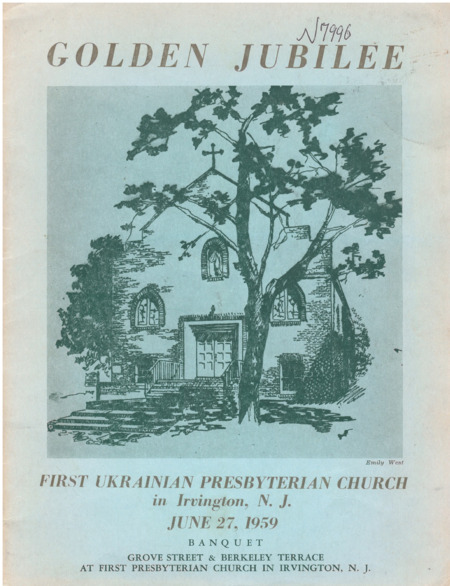
The Rev. Basil Kusiw (Kuziv), pastor of the First Ukrainian (Ruthenian) Presbyterian Church of St. Peter and St. Paul in Newark, was the head of the Ukrainian department and the founder of this program at Bloomfield College. He was also instrumental in raising funds to donate Ukrainian books to the Newark Public Library, which developed a special section for Ukrainian publications at the time Bykovskyi, Lev. Vasyl Kuziv. His Life and Activities (in Ukrainian). Detroit, 1966. Ukrainian Evangelical Association in North America. pp.15, 17. This was done in conjunction with the efforts of Newark Public Library director John Cotton Dana, who encouraged the establishment of foreign language collections for the use of the local immigrant communities.
The influx of a new wave of Ukrainian immigrants to New Jersey along with a simultaneous “baby boom” saw a significant expansion of these educational institutions that continued into the 1960s through the 1990s. There was an effort to establish all-day primary Parochial Schools. Such institutions were founded in Jersey City (1949 with a new building constructed in 1962); Perth Amboy (1963); Passaic (1949, although the history of the school as an evening school goes back to 1921); Newark (1939, with a new building opened in 1955). The arrival of Ukrainian immigrants with higher education and advanced degrees from Europe also greatly strengthened education. Professionals like Kost Kysilevsky in NewarkKost Kysilevsky’s papers are at the Shevchenko Scientific Society Archives. They contain extensive primary source material about his educational activities in Newark and New York City established not only Ukrainian heritage schools with rigorous classwork for youth, but also remedial adult classes for people whose education had been interrupted by the war and refugee life. A significant number of the students in those courses went on to get college degrees and establish professional careers.Virlana Tkacz oral history interview . 2025. Ukrainian History and Education Center Archives.
In terms of higher education in the state through the 1990s, two institutions stand out: St. Peter’s College and Rutgers University. Both had excellent professors who covered Ukraine and associated topics in their courses and two were New Jersey residents: Konstantyn Sawczuk taught in the history department of St. Peter’s College (now university) from 1964-1981 and became its chairman, while Taras Hunczak taught in the history department of Rutgers University (Newark campus) from 1960-2004 and was also the department chairman. In 1999, Alexander Motyl, a New York resident, began teaching at Rutgers University (Newark). He is currently professor of political science and deputy director of the Division of Global Affairs at the university. He is also a poet, writer, translator, and painter.
Youth activities
Various Ukrainian-themed activities and clubs existed since the 1920s and ’30s. For example, in 1929, the famed folk dance master and impresario Vasile Avramenko established his “franchise” Ukrainian folk-dance schools in lower Manhattan, Brooklyn, Staten Island, and Yonkers, New York; in Perth Amboy, Carteret, Elizabeth, Passaic, and Newark, New Jersey; and in Philadelphia, Pennsylvania.Martynowych, Orest. T. The Showman and the Ukrainian Cause: Folk Dance, Film, and the Life of Vasile Avramenko. Winnipeg, Canada: University of Manitoba Press, 2014. p. 55. Scout troops formed under the auspices of the American Boy or Girl Scouts formed at Ukrainian American parishes. However, the tendency to Americanize during that period somewhat limited the formation of strongly Ukrainian-oriented organizations.
The third wave changed that landscape significantly in the 1950s. They imported organizations such as the Plast Ukrainian Scouting Organization (formed in Ukraine with deep ties to the international Scout Movement) and the Ukrainian Youth Association (commonly known by its Ukrainian acronym SUM or CYM). These provided cultural education, opportunities for camping and outdoor activities outside of the city, and other Ukrainian-centric programming.Virlana Tkacz oral history interview. 2025. Ukrainian History and Education Center Archives. This form of cultural education continued in New Jersey at various Ukrainian community centers long after the arrival of the third-wave immigrants and indeed is still popular today. It has become a fun way to promote Ukrainian heritage both in the community and outside through various well-received public performances.
Athletics and Sports
In addition to education, culture, and activism, athletics and sports have played a role in the life of Ukrainian Americans in New Jersey. In the early years, it was focused not primarily on competitive sports, but on what would have been called “physical culture”, such as gymnastics, strength training, and similar activities, often in organized groups. Such physical culture organizations were popular in eastern Europe, including the Czech, Polish, Slovak, and later Ukrainian “Sokol” (“Falcon”) organizations. In Ukraine, one of the groups in this wider movement was called the “Sich”, named after a term for Cossack fortifications. It was founded in 1900 in Zavillia, Sniatyn region, then spread to other locales. A unified regional organizational structure was established in 1908, with its leadership dominated by members of the Ukrainian Radical Party. From the beginning, local Sich organizations had a strong component of Ukrainian ethnic identity, while remaining focused on athletic activities and serving as volunteer fire brigades.
By 1915, the Sich had made the leap across the Atlantic, starting with a branch in New York City. During and after the ill-fated period of Ukrainian independence that began in 1917, the Sich took on more paramilitary overtones, with military-style uniforms and marching drills with the purpose of being ready to provide assistance in the event of any military action against Ukraine’s occupiers. In the mid-1920s, the U. S. Sich leadership became more political and openly professed support for the conservative Pavlo Skoropadsky, the would-be Ukrainian monarch. But it’s not clear how much the rank-and-file membership would have cared about this political rigamarole.
View video about a Sich group in western Pennsylvania
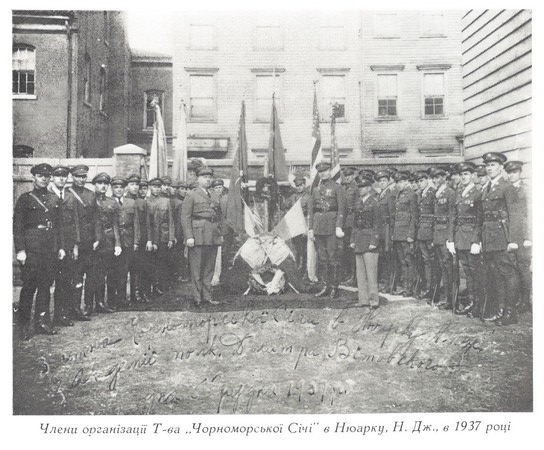
In 1924, a group called the “Chornomorska Sitch” (“Black Sea Sitch”) was formed in Newark. Initially, they were very much within the uniformed, quasi-military Sich zeitgeist of the time. However, in the 1930s, they began to make a shift from individual “physical culture” and marching drills to competitive team sports.Golden Almananc: The Fiftieth Anniversary of the Ukrainian National Home and History of the Ukrainian Community of Newark & Vicinity, 1977. pp. 73-74. They re-incorporated as the “Ukrainian Athletic Association Chornomorska Sitch” and began, for example, fielding a semi-pro baseball team called the “Ukrainians”.
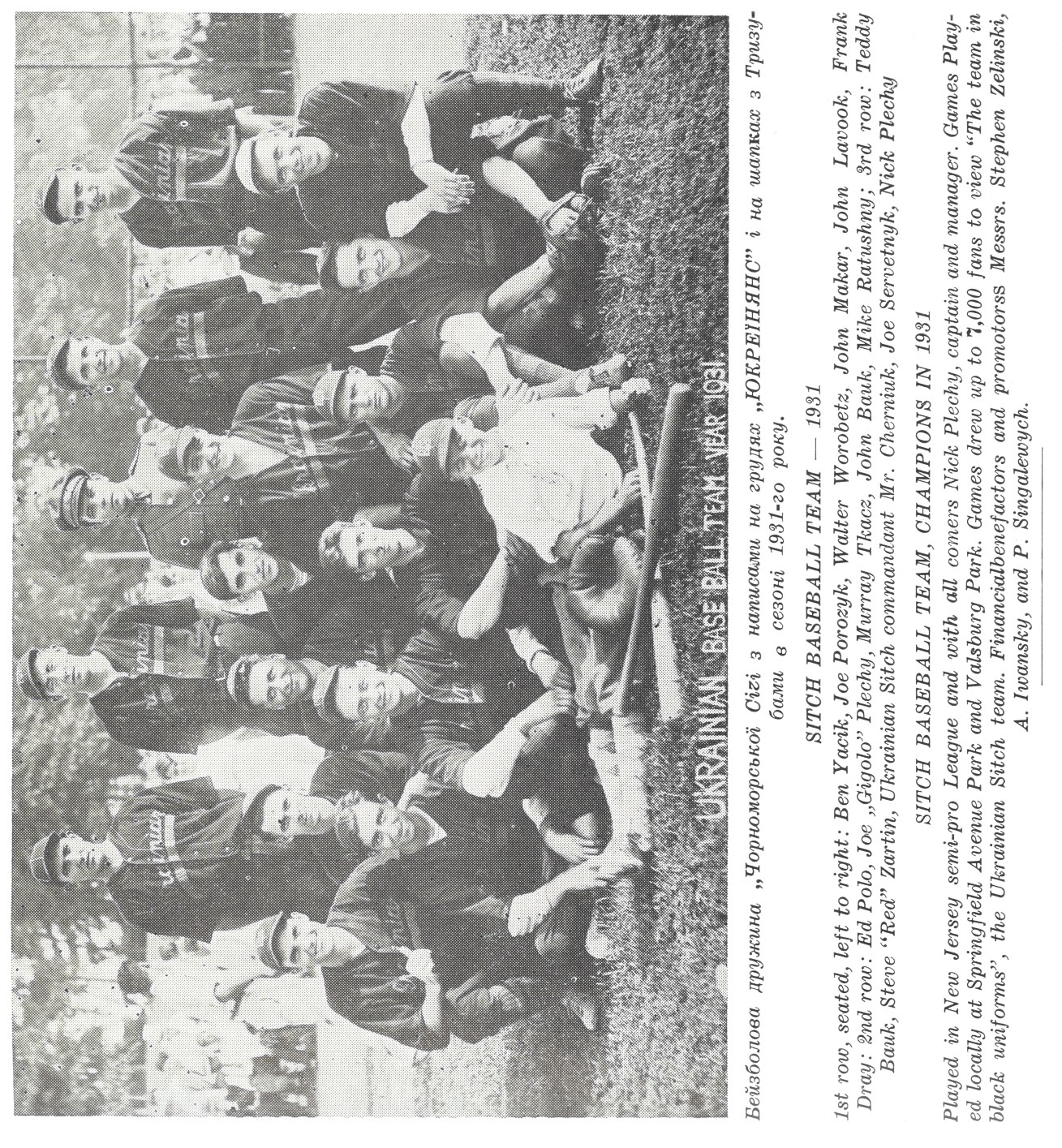
During the second half of the 20th century, the Chornomorska Sitch expanded to include a variety of sports, including soccer, volleyball, and even hockey. Initially based out of the Newark “Tsentralia”, it moved to Irvington and is now based out of the Ukrainian American Cultural Center in Whippany. Because of their transition from a Ukrainian “physical culture” society to competitive sports nearly a century ago, the Chornomorska Sitch is the only organization in the United States (and possibly the world) that was founded as part of the early 20th century “Sich movement” that has survived to the present day.
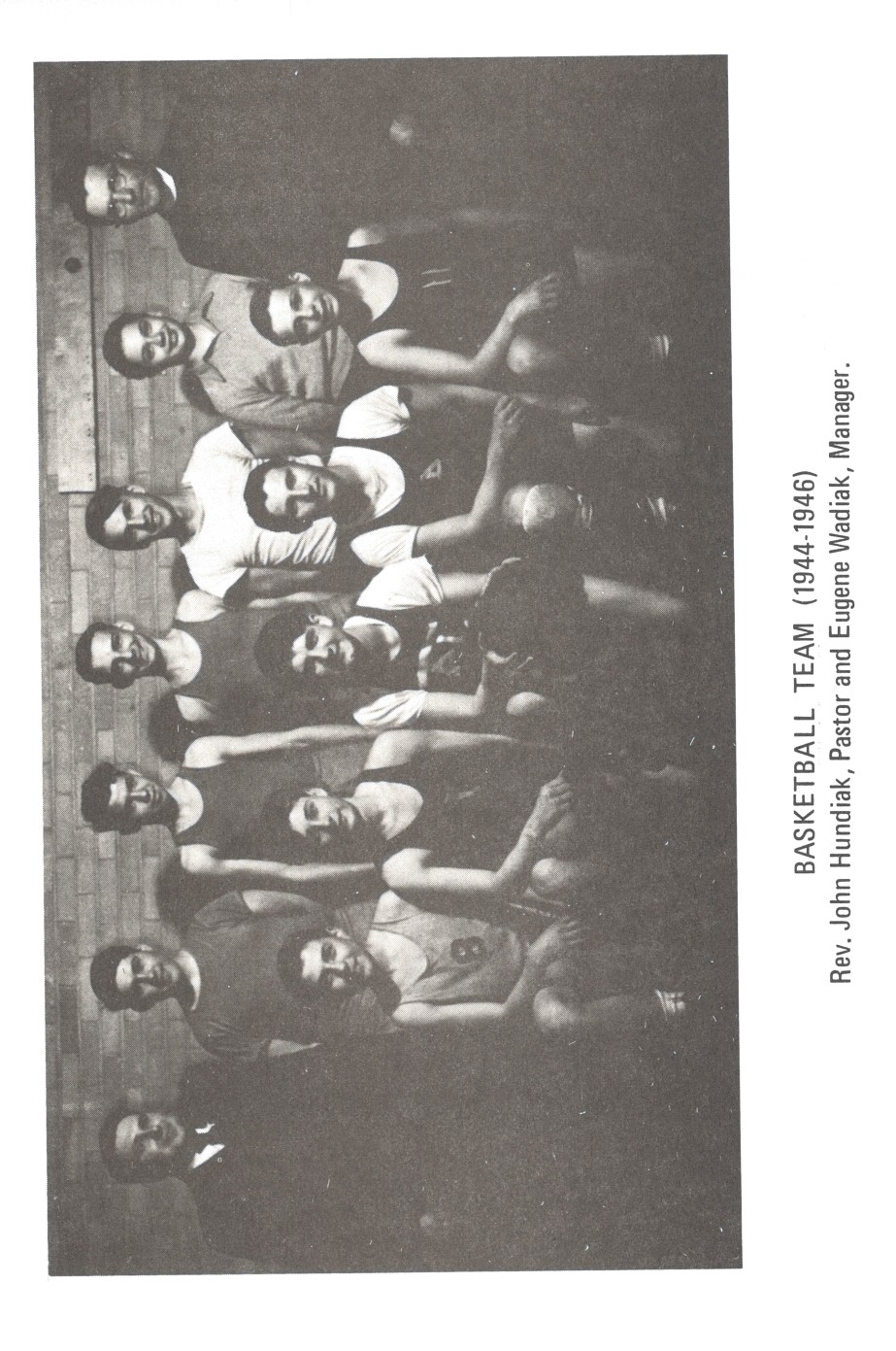
Participation in competitive team sports was by no means isolated to Newark. The 1930s and ‘40s (interrupted only by war), Ukrainian teams were playing basketball, softball, baseball, soccer, and even American football in local or church-sponsored leagues all over New Jersey.